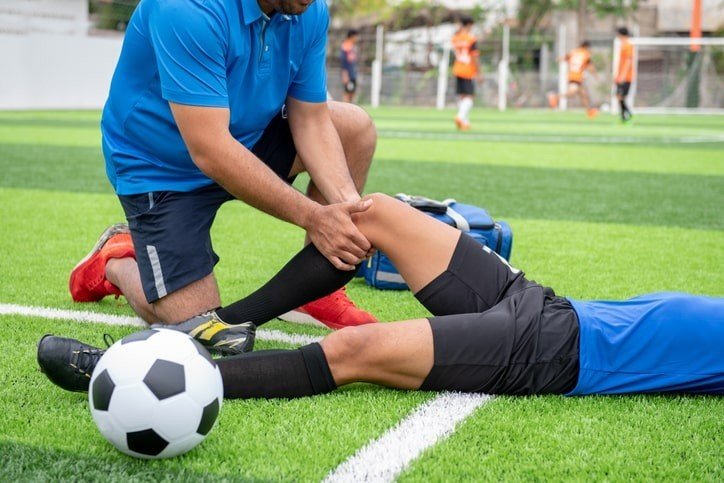
Muscle and ligament injuries can happen during sports, gym workouts, running, or even everyday physical activities. Pain, swelling, weakness, and restricted movement can make it difficult to continue normal activities. Consulting a Sports Injury Specialist in Sector 51 Gurugram can help identify the type and severity of the injury and guide you towards appropriate treatment and rehabilitation.
For more information, direct chat with us on WhatsApp.
At GS Care Multispeciality Clinic, orthopaedic and physiotherapy services are available for sports injuries and musculoskeletal problems. The clinic provides assessment, treatment, rehabilitation, and surgical care when required.
What Are Muscle and Ligament Injuries?
Muscles help the body move, while ligaments connect bones and provide stability around joints. Both can be injured because of sudden movements, falls, direct impact, overuse, poor training techniques, or inadequate recovery.
Common muscle injuries include:
- Muscle strains
- Muscle tears
- Calf injuries
- Hamstring injuries
- Groin strains
- Quadriceps injuries
Ligament injuries commonly affect the knee, ankle, shoulder, and other joints. Examples include ACL, PCL, and ankle ligament injuries.
The symptoms may vary depending on the severity of the injury. Some people experience mild discomfort, while others may develop significant swelling, bruising, instability, or difficulty putting weight on the affected area.
How Can a Sports Injury Specialist Diagnose the Injury?
Accurate diagnosis is an important first step in sports injury treatment. Pain alone does not always indicate the exact structure that has been damaged.
A Sports Injury Specialist in Sector 51 Gurugram may begin with a detailed discussion about how the injury happened. The doctor may ask about the movement or activity that caused the pain, previous injuries, current symptoms, and changes in mobility.
A physical examination can then help assess:
- Pain and tenderness
- Swelling and bruising
- Joint stability
- Muscle strength
- Range of motion
- Functional movement
Depending on the suspected injury, imaging tests may also be recommended. These can help assess the extent of muscle, ligament, joint, or bone damage.
Treatment for Muscle Injuries
Treatment depends on the type and severity of the muscle injury. Mild strains may improve with appropriate rest and rehabilitation, while more significant tears may require additional medical intervention.
A treatment plan may include activity modification, pain management, physiotherapy, stretching, strengthening exercises, and gradual return to activity.
Physiotherapy can be particularly important because simply resting the injured muscle may not restore its previous strength and flexibility.
A structured rehabilitation programme can help gradually improve movement while reducing the risk of re-injury.
Treatment for Ligament Injuries
Ligament injuries can range from mild sprains to complete tears. The appropriate treatment depends on the affected ligament, degree of damage, joint stability, activity level, and overall health.
Some ligament injuries can be managed without surgery. Treatment may involve bracing, physiotherapy, exercises, activity modification, and regular medical monitoring.
However, certain severe injuries may require surgical treatment. GS Care lists procedures such as ACL reconstruction, PCL reconstruction, meniscus repair, and knee and shoulder arthroscopy among its orthopaedic services.
A Sports Injury Specialist in Sector 51 Gurugram can assess the injury and determine whether conservative management or surgical treatment may be appropriate.
Why Physiotherapy Is Important After a Sports Injury
Treatment does not always end when pain starts improving. The injured area may remain weak or stiff even after the symptoms become less noticeable.
Physiotherapy focuses on restoring strength, flexibility, balance, coordination, and movement.
A rehabilitation programme may include:
- Range-of-motion exercises
- Muscle strengthening
- Balance training
- Flexibility exercises
- Functional exercises
- Sport-specific rehabilitation
- Gradual return-to-activity training
GS Care’s physiotherapy and rehabilitation department provides personalised programmes for sports injury rehabilitation and recovery.
This coordinated approach can be useful for people who want to return to exercise or sports safely.
When Should You See a Sports Injury Specialist?
Not every sports injury requires immediate specialist treatment. However, medical assessment is advisable when symptoms are severe, persistent, or affecting normal movement.
You should consider consulting a Sports Injury Specialist in Sector 51 Gurugram if you experience:
- Severe or increasing pain
- Significant swelling
- A popping sensation during injury
- Joint instability
- Difficulty walking or putting weight on the limb
- Persistent weakness
- Reduced range of motion
- Repeated injuries in the same area
- Pain that does not improve with basic care
Early assessment can help determine the cause of the problem and prevent inappropriate training or activity from making the injury worse.
How Can a Sports Injury Specialist Help Prevent Re-Injury?
Returning to sports too quickly can increase the risk of another injury. Even when pain has reduced, the muscles and ligaments may not have regained their full strength.
A specialist and physiotherapy team can create a gradual return-to-activity plan. This may involve progressive strengthening, flexibility training, balance exercises, movement correction, and sport-specific drills.
The aim is to make the transition back to normal activity controlled rather than sudden.
Proper warm-up, appropriate training loads, adequate recovery, and correct exercise techniques can also support injury prevention.
Why Choose GS Care for Sports Injury Treatment in Sector 51 Gurugram?
GS Care Multispeciality Clinic is located in Sector 51, Gurugram, and brings orthopaedic, physiotherapy, and rehabilitation services together. Its orthopaedic services include sports injury management, arthroscopy, ACL reconstruction, PCL reconstruction, and meniscus repair.
The clinic’s team includes Dr. Guruditta Khurana, listed as a senior orthopaedic, robotic joint replacement, and sports injury surgeon, along with physiotherapy professionals involved in sports rehabilitation.
Having different areas of care available within one clinic can make it easier to coordinate assessment, treatment, and rehabilitation according to individual needs.
Conclusion
Muscle and ligament injuries should not be ignored, particularly when pain, swelling, weakness, or instability continues. A Sports Injury Specialist in Sector 51 Gurugram can help identify the underlying injury and recommend an appropriate treatment pathway.
Depending on the condition, treatment may involve conservative care, physiotherapy, rehabilitation, or surgery. The recovery process should also focus on restoring strength and movement rather than simply reducing pain.
With appropriate assessment and a structured rehabilitation programme, patients can work towards returning to their normal activities safely and confidently.
Frequently Asked Questions
1. What does a sports injury specialist treat?
A sports injury specialist can evaluate and manage injuries involving muscles, ligaments, tendons, joints, and other musculoskeletal structures. Common problems include muscle strains, ligament sprains, ACL and PCL injuries, meniscus injuries, and sports-related joint problems.
2. Do all ligament injuries require surgery?
No. Some ligament injuries can improve with conservative treatment, including physiotherapy, bracing, activity modification, and rehabilitation. Severe or unstable injuries may require surgery depending on the affected ligament and individual circumstances.
3. How long does a muscle injury take to recover?
Recovery time varies according to the location and severity of the injury. A mild strain may improve relatively quickly, while a significant muscle tear can require a longer period of rehabilitation. A specialist can provide a more appropriate recovery plan after assessment.
4. Can physiotherapy help after a ligament injury?
Yes. Physiotherapy can help improve strength, flexibility, balance, range of motion, and functional movement following many ligament injuries. Rehabilitation is often an important part of returning to normal activities and sports.
5. When can I return to sports after an injury?
Return to sports should depend on recovery rather than simply the number of days since the injury. Pain, strength, flexibility, stability, movement quality, and sport-specific function may all need to be considered before returning to full activity.